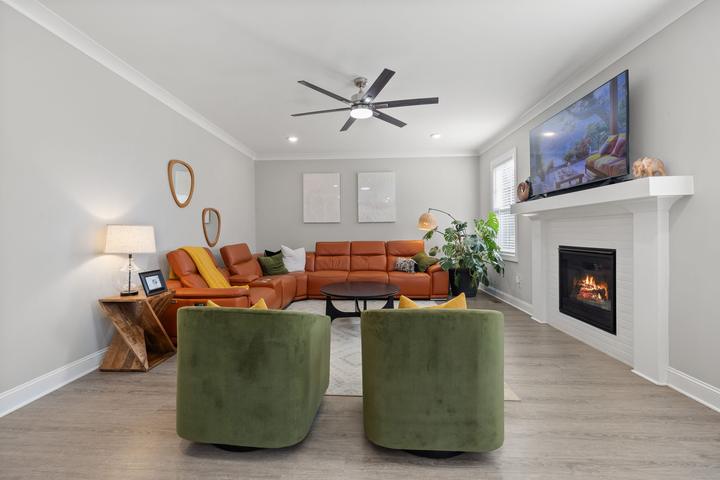
Clean, dry, untreated lumber is wood, and wood is what a fireplace is built to burn, so a few pieces of it will burn. Pressure-treated, painted, coated or glued lumber is a different matter. The EPA says never to burn it, and that includes plywood and particle board. When you cannot tell what is in a board, leave it out.
Lumber is wood, until something is added
Plain solid lumber is the same material as firewood. The fireplace does not know the difference between a split log and a dry offcut of untreated board. What matters is what has been added to the board, what is stuck to it and how dry it is.
The Brick Industry Association explains that residential fireplaces are for burning wood and are not designed for fuels that generate temperatures higher than wood does. Clean lumber stays within that. Anything that changes the fuel does not.
What the EPA says never to burn
The EPA's Burn Wise page gives a list, and lumber falls into several lines of it. Do not burn coated, painted or pressure-treated wood. Do not burn plywood, particle board or any wood with glue on or in it. Do not burn household trash, plastics, foam or the colored ink of magazines and boxes.
Construction lumber is where people slip. Framing offcuts from a deck can be pressure-treated and look identical to untreated wood. Trim and furniture scraps are often painted or glued. A rebuilt kitchen or a torn-out shelf makes a pile that looks like free fuel and is not.
Pressure-treated boards, including deck and fence scraps.
Painted, stained or coated trim.
Plywood, particle board and anything with glue.
Wood that is wet, rotted, diseased or moldy.
Dryness decides how it burns
End grain of a split log
Cracks from drying
Top cover
Stacked rows
Raised off the ground
Not drawn to scale. The numbered parts are named below, with the cracks from drying highlighted.
Even clean lumber burns badly when it is wet. The EPA says to burn only dry, split, well-seasoned wood, seasoned for at least six months, with a moisture content under twenty percent that you can check with a moisture meter. Wood stored outdoors off the ground with only the top covered dries best, because covering the sides traps moisture.
New lumber from a yard is not automatically dry. If a board feels cold and heavy, or it hisses and smokes, it is not ready to burn.
Fire starting and fire habits
Start the fire with newspaper, dry kindling or natural fire starters. The EPA warns against gasoline, kerosene and charcoal starter. It also advises building a hot fire rather than a smoldering one, and keeping appliance doors closed except when loading, because harmful chemicals including carbon monoxide can escape into the home.
Keep flammable items, such as curtains, furniture, newspapers and books, away from the fireplace. The US Fire Administration puts the distance at 3 feet from heat sources. A fire extinguisher should be handy.
Ashes and cleanup
Ash from any fireplace can hold live embers. The EPA says to remove ashes into a covered metal container, stored outdoors on a nonflammable surface. A bag, a bucket of plastic or a cardboard box does not qualify.
If you have burned something you should not have, do not use the fireplace again until the firebox is cleaned out.
What to burn instead
Seasoned hardwood or softwood firewood is the default. The EPA also notes that manufactured logs vary, and it advises checking your appliance's instructions first, since many wax and sawdust logs are for open fireplaces only. If you use them, choose logs made only from compressed sawdust.
A fireplace that is not working well is often asking for better fuel or a check of the damper and chimney, not for another kind of wood.
When the fireplace has been used for the wrong fuel
If treated or painted wood has already gone in, have the fireplace cleaned and inspected before the next fire. The US Fire Administration advises a professional cleaning and inspection of heating equipment and chimneys at least once a year.
We are a local, family-owned company, Proudly American, and our experienced crew works on Sarasota fireplaces. Our fireplace repair service covers the firebox, the damper and the parts that wear. Start with a free inspection and a written estimate.
Sources
EPA Burn Wise, best wood burning practices: what not to burn; dry split seasoned wood, six months, under twenty percent, moisture meter; fire starters; hot fires and closed doors; ash container; manufactured logs
Wet or poorly seasoned wood is the common cause, as the EPA's guidance on dry, split wood suggests. Also check that the damper is fully open, the fire has enough dry kindling and the flue is not blocked. A fireplace that still will not draw after those checks needs an inspection.
Can i use my wood burning fireplace?
Yes, once it has been cleaned and inspected. The US Fire Administration advises a professional cleaning and inspection of chimneys at least once a year. Burn only dry, split, well-seasoned wood, keep 3 feet clear of anything flammable and open the damper first.
What can you burn in a fireplace besides firewood?
Manufactured logs are an option if your appliance's instructions allow them. The EPA says many wax and sawdust logs are for open fireplaces only and recommends logs made only from compressed sawdust. Never burn trash, plastics, painted or treated wood.
Book Within 72 Hours of Your Free Inspection and Save 10%
Any service you book within 72 hours of your free inspection comes with 10% off. The written estimate is free either way.
Damaged firebox surfaces, or another change you have noticed.
Review the recommendation
Understand the proposed task, relevant materials and access.
Authorize the work
Agree on the price and the scope before the paid job begins.
Keep the work record
Retain the component details and any remaining recommendations.
Ready When Your Chimney Is
Call our family-run office in Sarasota for a free inspection, or send the short form and we will call back to set a time. We cover Sarasota and Venice in Sarasota County and Bradenton in Manatee County, and nowhere else.